
Equine Dentistry: An Essential Part of Horse Health
Date: 1 Jul 2026
Equine dentistry plays a vital role in maintaining a horse’s overall health, comfort, and performance. Unlike human teeth, a horse’s teeth continually erupt throughout most of their life. This natural process compensates for the wear caused by grinding fibrous forage. The upper jaw of the horse is slightly wider than the lower jaw, so sharp enamel points can develop along the edges of the teeth – the outside or buccal edge of the upper teeth and the inside or lingual edge of the lower teeth. These sharp points lead to discomfort and can cause wounds to the cheeks or tongue.
Common signs of dental problems include dropping partially chewed food (quidding), packing feed material into the cheeks, difficulty chewing, weight loss, excessive salivation, bad breath, head tossing, resistance to the bit, and poor performance.
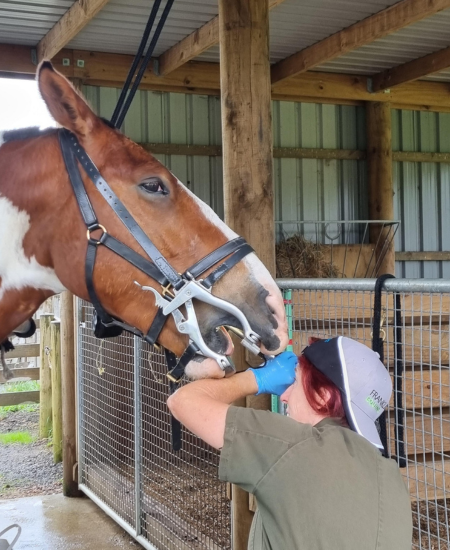
During a routine dental check, the head is examined and jaw movement evaluated. The horse is usually sedated before a speculum or dental gag is fitted to the head, so the mouth can be held open for safe examination and treatment. The structures within the mouth are palpated and visually assessed for sharp points, hooks, ramps, uneven wear, fractured teeth, periodontal disease, and other abnormalities. Sharp edges will be floated/filed, and plans will be made for any other needed treatment.
Regular dental examinations - at least once yearly allow potential problems to be identified and treated before they become serious. Younger horses (2-5 years) are actively shedding baby/deciduous teeth and erupting permanent ones, so they often need more frequent checkups, as do senior horses and those with known abnormalities such as missing teeth.
It is important that all horses have regular dental checks, not just those that are ridden. Broodmares benefit from good dental care, which ensures optimal nutrient absorption from feed and reduces inflammation associated with periodontal disease. The second trimester of pregnancy is a safe time for mares to have dental treatment.
Miniature horses are particularly prone to dental problems due to the large size of their teeth relative to the size of their skulls. Overcrowding can lead to displacement of teeth, impactions, and uneven wear, which in turn can result in loose or fractured teeth. “Parrot mouth” and “sow mouth” misalignments are also common, which can lead to long hooks or ramps that need to be reduced regularly.
Dr Catherine Pemberton BVSc
Back...