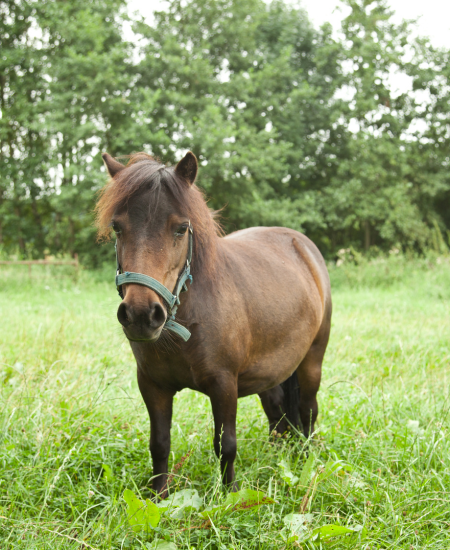

Remember to hug your miniature horse and pony throughout the winter
Date: 1 May 2026
Our Minis develop lovely, fluffy insulating coats that provide great protection against cold winter weather. However, this can also hide what is going on underneath. So, we recommend a weekly cuddle to feel your horse’s body condition – this may be lighter or heavier than expected.
A lighter body condition may simply require an increase in caloric intake, but may also indicate poor utilisation of feed. In Minis, this is often due to a dental problem that limits the initial breakdown of food before it is swallowed. Dental problems are common in Minis as their teeth are relatively large – almost the same size as a full-sized horse’s teeth! It is important that they are examined with a dental speculum (gag) so that all the teeth can be seen and felt. Another common reason for low body weight is a worm burden. A fresh faecal sample sent to the lab for egg count is a useful check. However, it is recommended that all horses are wormed going into winter to reduce small strongyle larval numbers, kill bot larvae before they leave the horse and hibernate in the ground to emerge as bot flies in the summer, and to remove tapeworms.
When you are having that cuddle, also pay close attention to how the skin feels. With a lot of rain followed by warm sunshine, it is not uncommon for us to see “rain scald”. This is a dermatitis (skin infection) caused by normal skin bacteria gaining access to the deeper layers of the skin after the skin has been softened by rain. Usually, this can be controlled with medicated washes (e.g., iodine), but occasionally it will require antibiotics and anti-inflammatory medication.
Another common problem we see in winter is lice. If your horse starts enjoying their scratches more or is rubbing against fences or other objects in the paddock, have a look at the base of the mane for lice – they look a bit like small, crawling sesame seeds. Discuss the best treatment for your horse with your vet – there are powders, sprays, and pour-on products available to control lice. Remember, they will transfer from horse to horse through direct contact or via brushes, blankets, and tack, so all horses will usually need to be treated.
Dr Catherine Pemberton BVSc
Back...